
Direct answer: Cassia twig (桂枝, guìzhī) is the young, slender branch of the cassia tree, Cinnamomum cassia (syn. C. aromaticum), the same tree that yields cinnamon bark (桂皮). It has a warm, spicy, sweet, woody-bark scent and is a classical Chinese materia-medica part. It is the young twig of the same tree as 桂皮 — same species, different part.
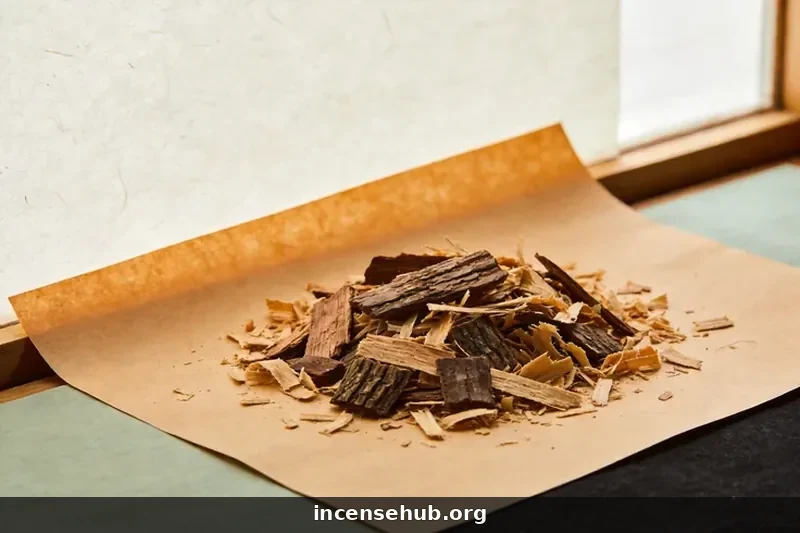
Key facts
| Chinese | 桂枝 (guìzhī); tree = 桂 (guì) |
| Botanical source | Cinnamomum cassia (syn. C. aromaticum), family Lauraceae — the young twig |
| What it is | The young branch of the cassia tree, distinct from its bark |
| Aroma | Warm, spicy, sweet, woody |
| Traditional role | Materia medica; same tree as cinnamon bark (桂皮) |
Aroma profile
Direct answer: 桂枝 has a warm, spicy, sweet, woody-cinnamon scent — the familiar cassia aroma, but from the young twig rather than the mature bark. It is lighter and more woody-green than the dense, pungent bark (桂皮), carrying the same cinnamon warmth with a fresher, branch-like edge.
桂枝 has a warm, spicy, sweet, woody-cinnamon scent — the familiar cassia aroma, but from the young twig rather than the mature bark. It is lighter and more woody-green than the dense, pungent bark (桂皮), carrying the same cinnamon warmth with a fresher, branch-like edge.
The aroma difference is a part difference: the bark concentrates the tree’s pungent aromatic oils at their densest, while the young twig carries the same warmth more lightly, with a greener, woodier character. This is the same “same tree, different part” logic that separates 桂皮 from 桂枝 — and it is the whole reason the two are distinguished in the classical record.
The Cassia Twig (桂枝) / cinnamon bark (桂皮) distinction (read this)
Direct answer: 桂枝 and 桂皮 come from the same tree, different parts: 桂枝 is the young, slender branch, lighter and woodier; 桂皮 is the mature bark, denser and more pungent. The Bencao Gangmu records the tree under 桂 and distinguishes its parts.
桂枝 and 桂皮 come from the same tree, different parts:
- cassia twig (桂枝) — the young, slender branch of Cinnamomum cassia. This entry.
- cinnamon bark (桂皮) — the mature bark of the same tree. Its own entry (the “cinnamon” entry on this site).
The Bencao Gangmu (本草纲目), 木之一, records the tree under 桂, distinguishing its parts — the bark (桂皮/肉桂) and the young twig (桂枝) — with the classical note “桂枝之下無雜木” (no other wood grows beneath the cassia twig), from the Lüshi Chunqiu. This page describes 桂枝 = the young twig, not the bark. See cinnamon (桂皮).
Botanical source and origin
Direct answer: Cinnamomum cassia (syn. C. aromaticum), the Chinese cassia, is a laurel-family tree (Lauraceae) native to southern China and Vietnam. Its bark is the spice “cassia” (桂皮), and its young twigs (桂枝) are a distinct materia-medica part.
Cinnamomum cassia (syn. C. aromaticum), the Chinese cassia, is a laurel-family tree (Lauraceae) native to southern China and Vietnam. Its bark is the spice “cassia” (桂皮), and its young twigs (桂枝) are a distinct materia-medica part. Flora of China records the species; the same botanical identity underlies both the twig and bark entries here.
The botanical point is economy of parts: one tree supplies at least two distinct materials — the bark (a spice and incense material) and the twig (a materia-medica part) — each with a different aromatic character and a different classical use. The same tree, two entries, because the parts genuinely differ.
The cassia / cinnamon naming point
Direct answer: In Western usage, “cinnamon” and “cassia” are often conflated, but botanically the tree here is Cinnamomum cassia — Chinese cassia — whose bark is the pungent “cassia” spice (桂皮) and whose twig is 桂枝. The site’s “cinnamon” entry (桂皮) is this same tree’s bark.
There is a naming point worth pinning down:
- 桂 (the tree) — Cinnamomum cassia (syn. C. aromaticum), the Chinese cassia, one tree supplying both bark and twig.
- 桂皮 (cinnamon bark / cassia) — the mature bark, the pungent spice, this site’s “cinnamon” entry.
- cassia twig (桂枝) — the young twig, the materia-medica part, this entry.
In much Western spice usage, “cinnamon” loosely covers both true cinnamon (C. verum) and cassia (C. cassia); the tree here is the Chinese cassia, and its twig (桂枝) is a distinct part from its bark (桂皮). The two entries on this site record that part split. See cinnamon.
In Chinese tradition
- Materia medica: 桂枝 is a classical Chinese materia-medica part. This is traditional materia-medica language, not modern clinical evidence.
- Naming: the Bencao Gangmu (本草纲目) records the tree under 桂, distinguishing the bark (桂皮) and the young twig (桂枝).
- Symbolism: the classical line “桂枝之下無雜木” (no other wood grows beneath cassia) reflects the tree’s reputed dominance over its surroundings.
Traditional use vs modern evidence
Direct answer: The materia-medica record is traditional, not established clinical fact, and we make no medical claims. The documented facts are botanical identity, the Lauraceae placement, and the twig’s distinction from the bark.
- Traditional Use — 桂枝 in the 本草綱目, with described medicinal uses. Traditional materia-medica language, not modern clinical evidence.
- Historical Record — the Bencao Gangmu (本草纲目) 木之一 record of 桂, distinguishing 桂皮 and 桂枝 (“桂枝之下無雜木”, quoting the Lüshi Chunqiu).
- Scientific Evidence — the botanical identity (Cinnamomum cassia, Lauraceae) and the twig-vs-bark part distinction are established. We present no clinical or medical efficacy claims.
The materia-medica record is traditional, not established clinical fact, and we make no medical claims. The documented facts are botanical identity, the Lauraceae placement, and the twig’s distinction from the bark.
Why is cassia twig used?
Direct answer: Cassia twig is primarily a materia-medica part, but its warm, spicy, woody-cinnamon scent can lend a woody-spicy accent. It is the twig of the same tree as the incense spice cassia (桂皮), but its classical role is in materia medica rather than as a lead 香材.
Cassia twig’s role is principally materia medica, not incense. Its warm, spicy, woody-cinnamon scent can lend a woody-spicy accent — the same cassia warmth as the bark, but lighter and greener — but the classical record places it in the materia-medica canon, not among the lead 香材. Where it does appear aromatically, it functions as a warm, spicy-woody support note, and its identity is inseparable from the bark of the same tree.
This is the key asymmetry: 桂皮 (the bark) is the famous spice and incense material; 桂枝 (the twig) is the materia-medica part of the same tree. The twig is not “lesser cassia” — it is a different part with a different classical role.
How is it processed?
Direct answer: Cassia twig is processed by harvesting the young, slender branches, cleaning and drying them, and using them whole or cut. There is no distillation or extraction; it is a whole dried twig, and drying preserves its warm, spicy, woody character.
The processing is straightforward:
- Harvest — the young, slender branches are cut from the cassia tree.
- Clean and dry — the twigs are cleaned and dried to a stable, storable form.
- Cut or use whole — dried twigs are used whole or cut into lengths.
There is no distillation or extraction step; cassia twig is a whole dried branch. The practical variables are harvest age (young twig vs older branch) and drying, which preserve its warm, spicy, woody character.
What determines quality?
Direct answer: Cassia twig quality is a matter of part and condition: a clean, dry, young twig with a warm, spicy, woody-cinnamon scent. The key distinction is the part — twig (桂枝) vs bark (桂皮) — and freshness of the aromatic character.
The quality factors:
- Part — the decisive factor; young twig (桂枝) vs 桂皮 (bark) are different materials with different characters.
- Condition — clean, dry, intact twigs without mold or damage.
- Aroma — a warm, spicy, woody-cinnamon scent, lighter and greener than the bark.
There is no standardized grading ladder; the part distinction and the aromatic freshness are the practical signals.
Common forms
Direct answer: Cassia twig is sold as the dried whole or cut twig. It is a loose dried-branch material, not an oil or extract, and it is distinguished from the bark (桂皮) by part.
| Form | Use |
|---|---|
| Dried whole twig | Materia medica; aromatic accent |
| Cut twig | Blending; decoction |
The distinction is part, not form: the twig (桂枝) is a different material from the bark (桂皮) of the same tree.
Safety
Incense combustion produces smoke and particulate matter. Burn in a well-ventilated space, avoid inhaling concentrated smoke, and keep away from children and pets. This is editorial knowledge content, not medical advice. See our safety guide.
Summary
Cassia twig (桂枝) is the young, slender branch of Cinnamomum cassia (syn. C. aromaticum), the same laurel-family tree whose mature bark is the cinnamon spice 桂皮. It carries a warm, spicy, sweet, woody-cinnamon scent — lighter and greener than the dense bark — and is a classical materia-medica part, distinct in the Bencao Gangmu from the bark. Its identity is entirely part-level precision: 桂枝 (twig) vs 桂皮 (bark), one tree, two different materials.
FAQ
What is cassia twig (桂枝)? The young, slender branch of the cassia tree, Cinnamomum cassia (syn. C. aromaticum), the same tree that yields cinnamon bark (桂皮). It has a warm, spicy, sweet, woody-cinnamon scent and is a classical Chinese materia-medica part.
Is Cassia Twig (桂枝) the same as cinnamon bark (桂皮)? No — same tree, different parts. 桂枝 is the young twig, lighter and woodier; 桂皮 is the mature bark, denser and more pungent. The Bencao Gangmu (本草纲目) records the tree under 桂 and distinguishes its parts — the bark (桂皮) and the young twig (桂枝).
What does Cassia Twig (桂枝) smell like? Warm, spicy, sweet, and woody-cinnamon — the familiar cassia aroma, but from the young twig rather than the bark. It is lighter and more woody-green than the dense, pungent bark (桂皮), carrying the same warmth with a fresher, branch-like edge.
Is cassia twig an incense ingredient? It is primarily a materia-medica part. Its warm cassia scent can lend a woody-spicy accent, and it is the twig of the same tree as the incense spice cassia (桂皮), but its classical role is in materia medica rather than as a lead 香材.
Where does the saying “桂枝之下无杂木” come from? From the classical Lüshi Chunqiu, quoted in the Bencao Gangmu (本草纲目): “桂枝之下無雜木” — no other wood grows beneath the cassia twig. It reflects the cassia tree’s reputed dominance over its surroundings.
Is cassia the same as cinnamon? In much Western spice usage, “cinnamon” loosely covers both true cinnamon (Cinnamomum verum) and cassia (Cinnamomum cassia). The tree here is the Chinese cassia (C. cassia, syn. C. aromaticum), whose bark is the pungent “cassia” spice (桂皮) and whose twig is 桂枝. The site’s cinnamon (桂皮) entry is this same tree’s bark.
See also: cinnamon (桂皮), clove, ginger, and the full scent guide.
Evidence & Sources
Botanical identity
Source: Cinnamomum cassia in Flora of China · Cinnamomum aromaticum on GBIF. Evidence type: Established (GBIF treats C. cassia as a synonym of C. aromaticum).
Traditional Chinese use
Source: the Bencao Gangmu (本草纲目), 木之一, records 桂, distinguishing 桂皮 and 桂枝 (“桂枝之下無雜木”, quoting the Lüshi Chunqiu). Evidence type: Historically documented — materia medica; medicinal uses are traditional, not modern clinical evidence.
Authenticity / disambiguation
Source: 桂枝 (twig) vs 桂皮 (bark) — same tree, Cinnamomum cassia, different parts. Evidence type: Practical screening.
Safety
Source: incense combustion produces smoke and particulate matter; burn in a well-ventilated space. Evidence type: Established.
Evidence status
| Layer | Status |
|---|---|
| Botanical identity | Established |
| Traditional use | Historically documented (materia medica) |
| Authenticity test | Practical screening |
| Health claims | Not established |
Sources
Sources: botanical references on Cinnamomum cassia and the Bencao Gangmu (本草纲目) 木之一 record of 桂/桂枝. 桂枝 is documented as the young cassia twig, distinct from the bark 桂皮; medicinal uses are treated as traditional, not established clinical fact. This is editorial knowledge content, not medical advice.