
Direct answer: Violet (紫罗兰, zǐluólán) is here the sweet violet, Viola odorata, a small flowering herb of the violet family (Violaceae) native to Europe and western Asia. Its flowers carry a soft, sweet, powdery, green scent prized in modern perfumery. It is a modern fragrance material, not a classical Chinese incense ingredient — and its Chinese name needs a caution, set out below.
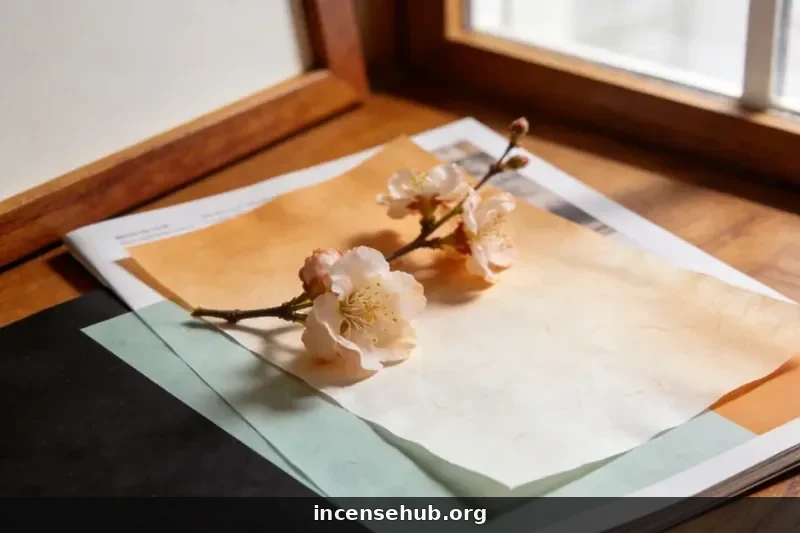
Key facts
| Chinese | 紫罗兰 (zǐluólán); sweet violet |
| Botanical source | Viola odorata (family Violaceae) — the flower |
| What it is | A European violet-family herb, not the garden “stock” 紫罗兰 |
| Aroma | Floral, sweet, powdery, green |
| Traditional role | None in classical Chinese incense; modern perfumery |
A naming caution (read this)
Direct answer: 紫罗兰 is a contested Chinese name. In Chinese it most often refers to the garden “stock” flower, Matthiola incana (Brassicaceae), a different plant from the violet. This entry — 紫罗兰 as Viola odorata — is the sweet violet, the fragrance flower whose scent defines the “violet” note in perfumery.
紫罗兰 is a contested Chinese name, and the honesty matters:
- In Chinese, 紫罗兰 most often refers to the garden “stock” flower, Matthiola incana (family Brassicaceae) — a different plant from the violet.
- This entry — 紫罗兰 as Viola odorata: the sweet violet, the violet-family (Violaceae) flower whose scent defines the “violet” note in perfumery. It is a European native, not a Chinese species.
Both readings of 紫罗兰 exist in Chinese; this page follows the sweet violet (Viola odorata), the fragrance flower, and distinguishes it from the garden stock.
Aroma profile
Direct answer: Violet has a soft, sweet, delicate floral scent with a powdery, slightly green, almost candy-like character — the classic “violet” note of fine perfumery. It is airy and refined, and its powdered sweetness is closely related to the orris (iris) root note that often stands in for it in modern fragrance.
violet (紫罗兰) has a soft, sweet, delicate floral scent with a powdery, slightly green, almost candy-like character — the classic “violet” note of fine perfumery. It is airy and refined, and its powdered sweetness is closely related to the orris (iris) root note that often stands in for it in modern fragrance.
The defining trait is the powdery-sweet quality — a soft, almost cosmetic, “velvet” floral that reads as airy and refined rather than heady or indolic. This powdered character is the link to orris (iris) root, which supplies a similar powdery-sweetness and, in modern perfumery, often stands in for the fleeting violet flower.
A provenance note (read this)
Direct answer: violet (紫罗兰) is a modern fragrance material, not a classical Chinese 香材. Viola odorata is a European and western-Asian species; the Chinese name 紫罗兰 also names the garden stock (Matthiola incana); and the violet note in perfumery is a modern European tradition, often rendered with orris root rather than the flower.
violet (紫罗兰) is a modern fragrance material, not a classical Chinese 香材:
- Viola odorata is a European and western-Asian species, not native to China; Flora of China does not record it as native.
- In Chinese, 紫罗兰 also names the garden stock (Matthiola incana), a different plant — a naming overlap to flag.
- The violet note in perfumery is a modern European tradition (and is often rendered with orris root), absent from the classical 香材 canon.
This page records it honestly as a modern fragrance flower — no classical Chinese origin is claimed, and none is fabricated.
Botanical source and origin
Direct answer: Viola odorata, the sweet violet, is a low perennial herb of the violet family (Violaceae), native to Europe and western Asia. Its small, purple flowers are the fragrant part; the scent is delicate and famously fleeting, so modern perfumery often recreates it with orris (iris) root. GBIF records the species.
Viola odorata, the sweet violet, is a low perennial herb of the violet family (Violaceae), native to Europe and western Asia. Its small, purple flowers are the fragrant part; the scent is delicate and famously fleeting, so modern perfumery often recreates it with orris (iris) root. GBIF records the species. It is distinct from the garden stock (Matthiola incana, Brassicaceae) that also goes by 紫罗兰 in Chinese. See Viola odorata on GBIF.
Chinese name and terminology
Direct answer: 紫罗兰 is a naming collision: in Chinese it most often names the garden stock (Matthiola incana, Brassicaceae), while the sweet violet of perfumery is Viola odorata (Violaceae). The shared name hides a different-family, different-scent divide — and it is not an orchid, despite the 兰 (“orchid”) element.
The name 紫罗兰 is the single most important disambiguation on this page. In everyday Chinese, 紫罗兰 usually means the garden stock, Matthiola incana — a Brassicaceae (mustard-family) ornamental with a different scent and a different botanical family from the violet. The sweet violet of perfumery, Viola odorata, is a Violaceae herb. Despite the 兰 (“orchid”) element in 紫罗兰, neither plant is an orchid — the name is a decorative coinage, not a botanical label. For the reader, the terminology rule is to specify which 紫罗兰 is meant, because the two plants share a name but differ in family, scent, and use.
Why is it used in fragrance?
Direct answer: The violet note is a classic soft, powdery floral in fine perfumery, prized for its airy, refined sweetness. Because the flower’s scent is fleeting, the note is almost always rendered with orris (iris) root or synthetic ionones rather than the raw flower — a botanical-to-substitute chain that defines the material’s modern use.
The violet note is a classic soft, powdery floral in fine fragrance, prized for its airy, refined sweetness. The reason it is almost never used as the raw flower is practical: the natural violet’s scent is delicate and famously fleeting, so it does not survive extraction well. Modern perfumery therefore renders the note through two substitutes — orris (iris) root, which supplies a similar powdery-sweetness, and synthetic ionones, the violet-smelling molecules — rather than the flower itself. This is the defining fact of the material’s modern use: “violet” in fragrance is usually a note, not a flower. See orris-root and plant sources of incense scents.
How is it processed?
Direct answer: Because the sweet violet’s scent is fleeting, the flower is rarely extracted at scale. The violet note is produced instead from orris root (a cured, aged rhizome) or from synthetic ionones — so the “processing” of the violet note is really the processing of its substitutes.
The sweet violet is not a material with a substantial extraction industry: its scent is too fleeting to extract efficiently, so there is little commercial “violet absolute” of consequence. The violet note is instead produced by two routes: orris root, which is harvested, cured, and aged for years to develop its powdery-sweet scent, and synthetic ionones, which reproduce the violet smell directly. The processing story of the violet note is therefore the processing story of its substitutes — a curing-and-aging route (orris) and a synthetic route (ionones).
What determines quality?
Direct answer: “Violet” quality is a note-level question, not a flower-level one. For orris root, quality turns on curing age and aroma; for ionones, on purity and consistency. A reader should establish which material — orris or synthetic — is actually meant before any quality discussion.
For the reader, “violet” quality is a note-level question. For orris root, the checks are curing age (orris improves with years of aging) and the powdery-sweet aroma; for synthetic ionones, the checks are purity and consistency. The first question is therefore not “how good is the violet?” but “which violet — orris root or synthetic ionone?” — because the raw flower is rarely the material being traded at all.
Common forms
Direct answer: Violet is traded as a perfume note, not usually as a raw flower. The note is carried by orris root (the cured rhizome) and by synthetic ionones; the raw sweet violet flower is a garden and ornamental material rather than a commercial fragrance raw material.
| Form | Typical use |
|---|---|
| Orris root (cured iris rhizome) | The botanical source of the powdery violet-adjacent note |
| Synthetic ionones | The synthetic violet-smelling molecules |
| Fresh flower | Ornamental / garden use, not commercial fragrance |
The distinction is functional: the raw flower is an ornamental, while the note is carried by orris and ionones.
In modern use
- Perfumery: the violet note is a classic soft, powdery floral in fine fragrance, often rendered with orris root or synthetic ionones.
- Home fragrance: violet scents appear in modern home fragrance and cosmetics.
- Not classical Chinese incense: violet has no place in the classical 香材 canon; its Chinese name and use are modern.
Traditional use vs modern evidence
Direct answer: There is no classical Chinese incense record for violet; its position is entirely modern. No medical claims are made. The documented facts are the botanical identity (Viola odorata, Violaceae), the 紫罗兰 naming collision with the garden stock, and the orris/ionone substitution that carries the note.
- Traditional Use — none in classical Chinese incense; violet’s fragrance role is entirely modern.
- Historical Record — no classical Chinese incense record exists for Viola odorata; the violet note is a modern European perfumery tradition.
- Scientific Evidence — the botanical identity (Viola odorata, Violaceae) is established, and the 紫罗兰 naming collision with the garden stock (Matthiola incana, Brassicaceae) is documented. No clinical or medical efficacy claims are presented.
There is no classical Chinese incense record for violet (紫罗兰); its position is entirely modern. We make no medical claims. The documented facts are botanical identity, the Violaceae placement, and its modern perfumery role.
Quality notes
Practical points:
- violet (紫罗兰) here is Viola odorata; expect a soft, sweet, powdery, green floral scent.
- Distinguish it from the garden stock (Matthiola incana), which shares the Chinese name 紫罗兰 — a different plant.
- In fragrance the violet note is often orris-root or ionone, not the raw flower; specify the material when sourcing.
Summary
Violet (紫罗兰), as the sweet violet Viola odorata (Violaceae), carries a soft, sweet, powdery, green floral note prized in modern perfumery. It is a modern fragrance material with no classical Chinese incense record, and its 紫罗兰 name collides with the garden stock (Matthiola incana). Because the flower’s scent is fleeting, the note is almost always carried by orris root or synthetic ionones rather than the raw flower.
FAQ
What is violet (紫罗兰)? This entry describes the sweet violet, Viola odorata, a small violet-family (Violaceae) herb native to Europe and western Asia. Its flowers carry a soft, sweet, powdery, green scent, the classic “violet” note of modern perfumery.
Is violet (紫罗兰) a classical Chinese incense ingredient? No. The sweet violet is a European species, not native to China, and it has no place in the classical 香材 canon. The violet note is a modern European perfumery tradition, often rendered with orris root.
Is violet (紫罗兰) the same as the garden stock flower? Not necessarily. In Chinese, 紫罗兰 most often names the garden stock (Matthiola incana, Brassicaceae), while the sweet violet (Viola odorata, Violaceae) is the perfume flower. They share a Chinese name but are different plants.
What does violet smell like? Soft, sweet, and delicate, with a powdery, slightly green, almost candy-like character — the airy, refined “violet” note of fine perfumery, closely related to the orris (iris) root note.
How is violet used in fragrance? As a soft, powdery floral note in fine perfumery, often recreated with orris (iris) root or synthetic ionones because the flower’s scent is fleeting. It is a modern European note, not a classical 香材.
Why is the violet note usually not the violet flower? Because the sweet violet’s scent is too fleeting to extract efficiently at commercial scale. Perfumers render the note with orris (iris) root — which shares the powdery-sweet character — or with synthetic ionones, the violet-smelling molecules, rather than the raw flower.
See also: orris-root, rose (玫瑰), jasmine (茉莉), and the full scent guide.
Evidence & Sources
Botanical identity
Source: Viola odorata on GBIF. Evidence type: Established.
Modern use
Source: the violet note as a soft, powdery perfumery floral, often rendered with orris root or ionones; a modern crossover with no classical Chinese incense record. Evidence type: Modern perfumery — no classical Chinese record; none claimed.
Authenticity / provenance
Source: 紫罗兰 (Viola odorata) vs the garden stock (Matthiola incana) — different plants sharing the Chinese name. Evidence type: Practical screening.
Safety
Source: incense combustion produces smoke and particulate matter; burn in a well-ventilated space. Evidence type: Established.
Evidence status
| Layer | Status |
|---|---|
| Botanical identity | Established |
| Traditional use | None (modern perfumery) |
| Authenticity test | Practical screening |
| Health claims | Not established |
Sources
Sources: botanical references on Viola odorata. violet (紫罗兰) is a modern fragrance flower with no classical Chinese incense record; no such origin is claimed. This is editorial knowledge content, not medical advice.