
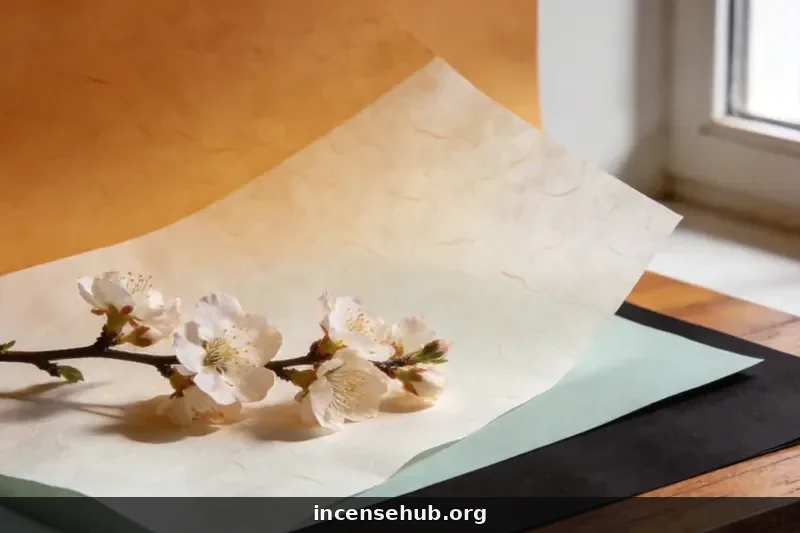
Direct answer: Banksia rose (木香花, mùxiānghuā) is the blossom of Rosa banksiae, a climbing rose in the family Rosaceae that grows wild across central and western China. It supplies a sweet, honeyed, lightly green floral to Chinese incense and is recorded in the classical compendium 香乘, yet two traps hide inside its name: the characters 木香 also label the root costus, and the plant’s best-known garden cultivars are scentless doubles bred for looks rather than fragrance.
Key facts
Direct answer: The essentials are a flower, not a root; a Rosaceae climber named Rosa banksiae; a sweet honeyed-green aroma; a 香乘 record; and a persistent confusion with the Asteraceae root costus.
| Attribute | Value |
|---|---|
| Chinese name | 木香花 (mùxiānghuā) — “muxiang flower” |
| Botanical source | Rosa banksiae (family Rosaceae) — the flowers |
| Material type | A flower, not a wood or root |
| Aroma register | Sweet, floral, honeyed, lightly green |
| Traditional role | Floral note; recorded in 香乘 |
| Primary confusion | 木香 the root (Saussurea costus, Asteraceae) |
The double hazard baked into the name
Direct answer: Two separate identification problems sit inside 木香花. The first is lexical — 木香 also spells the root costus — and the second is botanical — the species Rosa banksiae folds both fragrant and scentless flowers under one name. Neither question is answered by the label itself.
The lexical problem comes first. 木香花 translates as “muxiang flower,” and it carries the same two characters, 木香, that name costus — the dried root of Saussurea costus, a heavy, earthy, musky Asteraceae root that has nothing in common with a pale climbing-rose bloom. Shorten the label to 木香, drop the 花, and the single written clue separating flower from root vanishes. The classical record is itself the evidence that these are two objects, because 香乘 (卷二十五, 宣庙御衣攒香) enters 木香花 and 木香 as distinct items in one formula — a list that could not exist if they were the same thing.
The botanical problem follows right behind it. Rosa banksiae is a single species with several flower forms, and the cultivated double and semi-double kinds are scentless, while only the single-flowered kind may be fragrant. Resolving flower-versus-root still leaves the flower question open, because a “Banksia rose” can be the aromatic single form or the ornamental double, and the species name does not disclose which is on hand.
Botanical description
Direct answer: Rosa banksiae is an evergreen climbing rose. The Flora of China treatment sets its height at up to 6 m, its leaves at 3–5 (rarely 7) leaflets, and its white or yellow flowers at 1.5–2.5 cm across in clusters of 4–15, opening April–May. Scent is a property of the flower form, not of the species as a whole.
The plant belongs to the rose family, Rosaceae, and the Flora of China account fixes its measurements precisely. It is an evergreen climbing shrub reaching 6 m, the older wood armed with large rigid prickles. Each leaf divides into 3–5 leaflets, seven in occasional specimens, elliptic-ovate to oblong-lanceolate, 2–5 cm by 0.8–1.8 cm, leathery to the touch. The blooms sit 4–15 to a cluster, in simple umbels or corymbs, each 1.5–2.5 cm across, the petals five, semi-double, or double, colored white or yellow — and here the source attaches the decisive phrase “fragrant or not.” The fruit is an orange or black-brown hip, globose or ovoid, 5–7 mm. Blooming spans April–May, fruiting August–October. See Rosa banksiae in Flora of China and Rosa banksiae on GBIF.
The line that actually governs this material as a scent is a formal key inside the same source: “flowers double or semi-double, not fragrant; flowers single, fragrant or not.” That one clause turns fragrance from a matter of opinion into a matter of morphology. The double white and yellow forms — the yellow one is the familiar “Lady Banks’ rose” of gardens and seed catalogs — are not fragrant at all. Only the single-flowered wild form may be.
Why the famous form is scentless
Direct answer: The showy double forms are scentless because the same breeding change that multiplies petals destroys the scent machinery. A reader chasing fragrant 木香花 must specify flower form, not merely the species, because the single-flowered form is the only one that may carry the honeyed note.
The mechanism is a compact lesson in how selection reshapes a plant. A double rose is produced when a breeder converts the stamens into extra petals, a change that amplifies the display while it removes the scent-producing tissue. The chain runs: selection for fuller flowers → stamens converted to petals → scent-emitting structures lost → a bloom that looks lavish and smells of nothing → an ornamental rather than an aromatic. The single-flowered form retains its reproductive organs and, along with them, the capacity to make fragrance.
That biology becomes a sourcing rule. A label saying “木香花” or “Banksia rose” spans both forms, so the word “rose” carries no scent guarantee of the kind a buyer gets from damask rose (Rosa × damascena). The question to ask is whether the lot came from the single-flowered form, since that is the form with any aromatic value.
Aroma profile
Direct answer: 木香花 is a sweet, gentle rose-family floral — honeyed with a green edge — carrying none of jasmine’s indolic weight or a dried bud’s spice. It sits near a light, clear rose register rather than the opulent white florals, and it functions in a blend as a soft top note.
木香花 reads as sweet, honeyed, and lightly green: a clear floral, restrained rather than rich. It carries none of jasmine’s heavy indole and none of the peppery snap of a dried bud, which places it in the lighter end of the floral spectrum. What sets it apart from a generic “rose” impression is the honeyed character — a faint nectar sweetness backed by a fresh green edge that stops it tipping into cloying.
That profile dictates a fixed job in a composition. 木香花 is a soft floral top note: it lends a clean, honeyed lift at the opening and then steps back as the woods and resins beneath it rise. It brightens and freshens; it does not anchor. A blender trying to build a formula around it alone would find the note too thin to sustain the burn.
Where it sits among the other aromatics
Direct answer: 木香花 occupies the lightest shelf of the incense palette — a pale floral top note set far apart from the deep resins, dense woods, and heavy white florals. Reading it against sandalwood, agarwood, borneol, camphor, frankincense, rose, jasmine, and osmanthus is what prevents the material from being misassigned.
The aromatic cabinet is ordered by weight and register, and 木香花 belongs on the airiest tier. A side-by-side table makes the contrasts legible:
| Material | Register | Position in a blend | How it relates to 木香花 |
|---|---|---|---|
| Sandalwood | Warm, creamy wood | Base | A fixative anchor; 木香花 floats far above it |
| Agarwood | Deep, resinous wood | Base to heart | A structural core; 木香花 is a thin garnish beside it |
| Borneol | Cool, camphoraceous crystal | Top to heart | Sharp and piercing where 木香花 is soft and honeyed |
| Camphor | Medicinal, cold | Top | Aggressively volatile; the opposite of 木香花’s gentleness |
| Frankincense | Balsamic, citrus-resin | Heart | A bright resin lift; heavier and stickier than 木香花 |
| Rose (Rosa × damascena) | Rich, deep floral | Heart | The full-bodied cousin; 木香花 is the pale, dry version |
| Jasmine | Indolic, heady white floral | Heart | Dense and narcotic; 木香花 has none of that weight |
| Osmanthus | Fruity-apricot floral | Heart | Sweeter and rounder; 木香花 is greener and lighter |
Sandalwood and agarwood anchor a blend from the base and give it staying power. Borneol and camphor are cool, sharp top notes that slice through whatever surrounds them. Frankincense is a resin with a bright, balsamic lift. The three florals — rose, jasmine, osmanthus — are the nearest relatives, but each is heavier: rose rounded, jasmine narcotic, osmanthus fruity. 木香花 is the lightest member of that family, a honeyed green floral that behaves like a fine mist over the top of a blend rather than a heart-note body.
That placement carries a real consequence. A blend built on sandalwood or agarwood can absorb 木香花 as a brightening top note without strain. A blend built around borneol or camphor will flatten it, because those sharp notes overwhelm a pale floral. And set against the heavier florals, 木香花 works as a dry, green counterpoint — a way to lift rose or osmanthus without piling on more sweetness. Its value, in short, is contrast: it brightens what is heavy and greens what is sweet.
Role inside a 合香 (héxiāng) blend
Direct answer: Within the classical Chinese blending framework of 君臣佐使 — chief, minister, assistant, and guide — 木香花 functions as a guide or a top-level assistant, never the chief. It shapes the opening and smooths the transition, but it does not carry the formula.
The traditional 合香 system assigns each ingredient a structural role: the 君 (chief) sets the theme, the 臣 (minister) reinforces it, the 佐 (assistant) corrects and harmonizes, and the 使 (guide) leads the blend and clears the way. A light floral top note like 木香花 naturally lands in the 使 or upper-佐 position — it opens the composition, lends a honeyed lift, and hands off to the heavier materials, but it is too thin to stand as 君.
That placement explains why 木香花 appears in recipes as a supporting flower rather than a headlining 香材. Its job is transition and brightness: a honeyed-green note at the top that makes a woody or resinous base feel more open. A blender who understands the 君臣佐使 ladder will never ask 木香花 to lead, because its place in the structure is fixed by its weight, not by choice.
Sourcing and geography
Direct answer: Sourcing 木香花 as a scent material means sourcing a particular flower form from a particular region, not a commodity rose. The aromatic material is the wild or single-flowered bloom of the native range, and the garden double form — abundant and famous as it is — is an ornamental that has to be screened out.
The wild range is central and western China: Gansu, Guizhou, Henan, Hubei, Jiangsu, Sichuan, and Yunnan, in thickets, scrub, valleys, stream sides, and roadsides at 500–2,200 m, where the plant is widely cultivated. The export history is the instructive part: what reached Western gardens as the “Lady Banks’ rose” was overwhelmingly the showy, thornless, double-flowered kind — bred for abundance and appearance, not scent. The fragrant single form stayed behind in its wild, native populations.
That geographic-plus-form divide produces a working rule. An order for “Banksia rose” with no further qualification will almost certainly pull in the double garden form, which is botanically correct and aromatically empty. The correct specification has two parts: single-flowered form, plus a provenance pointing to the native range or to a grower who cultivates the single form deliberately. The first part separates the aromatic from the ornamental; the second locates the aromatic form where it actually grows. A supply chain that cannot answer either part is not delivering an incense material — it is delivering a garden flower under an incense label.
Supply chain and economics
Direct answer: 木香花 is a niche, low-volume material whose economics are shaped by its double identity — most of the world’s Rosa banksiae is ornamental, and only the single-flowered form has commercial value as a scent material, which keeps the aromatic supply thin and ties price to provenance rather than bulk.
The economics follow directly from the form problem. Ornamental Rosa banksiae is produced at nursery scale for landscaping, so the raw flower supply is large and cheap — but scentless. The aromatic single-flowered material is a much smaller, wilder crop, gathered from scattered native stands or grown by specialists who cultivate the single form on purpose. The outcome is a two-tier market: a large, inexpensive tier of decorative double blooms, and a small, provenance-sensitive tier of fragrant single blooms.
That structure has predictable consequences. Aromatic 木香花 is priced on identity and form verification rather than weight, because a kilo of double blooms and a kilo of single blooms look alike and smell nothing alike. The buyer who pays for the aromatic form is paying for the sorting and verification that separates it from the cheap ornamental tier. Batch sizes are small, turnover is irregular, and the material tends to move through specialist channels rather than commodity flower markets. None of this makes it costly in absolute terms — it is a light floral, not agarwood — but the aromatic form does carry a premium over the garden form, and that premium is the price of disambiguation.
Adulteration and substitution patterns
Direct answer: The realistic risks for 木香花 are substitution rather than adulteration — a double-form flower passed off as the single, or a different rose bloom sold under the name — because the material is cheap enough that sophisticated fakery is rarely worth the effort. The buyer’s job is to catch the wrong flower form or the wrong species, not to detect a counterfeit resin.
The substitution patterns follow the two traps already described. The first is form-level: a seller holding a warehouse of double “Lady Banks” blooms has every incentive to label them 木香花 and let the buyer assume fragrance, since the flowers are visually identical to the single form and cost far less to source. The second is name-level: the shared 木香 characters invite a mix-up with the root costus, where an abbreviated label collapses flower and root into one line and the wrong material ships.
A third, quieter risk is species-level substitution, where another pale climbing rose is sold under the Banksia name. This is harder to catch by eye and matters because the substitute carries a different scent, or none. The practical defense for all three is the same: verify plant part and flower form before anything else, buy from a channel that can answer those two questions, and treat a suspiciously abundant “fragrant Banksia rose” with the skepticism it deserves.
Storage and shelf life
Direct answer: 木香花 is a delicate dried flower whose light, honeyed note fades with time and exposure, so storage is about slowing that fade — airtight, dry, cool, and dark — and the material should be used while fresh rather than stockpiled.
The note is volatile and fragile. A floral top note is made of light scent compounds that evaporate readily, which is exactly why 木香花 opens a blend and then recedes. That same volatility makes it a poor keeper: exposure to air → gradual loss of the light scent compounds → a note that flattens toward hay → a flower that is botanically intact but aromatically spent. Storage exists to slow that sequence.
The rules are the standard dried-floral rules, enforced tightly. Seal the material against air and humidity, because moisture invites mold and air carries the scent away. Keep it cool and dark, because heat and light accelerate the loss of volatiles. Do not crush it, because crushed surface area exposes more of the flower to air. And avoid stockpiling: a light top note with a short aromatic life should be bought in small batches and used promptly, not held in reserve like a base wood that improves with age.
Quality-control checklist
Direct answer: Quality control for 木香花 is a short, gated list — identity, form, aroma, condition — and a lot that fails any single check should be rejected, because the checks are not independent: a correctly named but scentless double form is worthless no matter how clean it looks.
The checks, in the order they should be run:
| Step | Question | Pass signal | Fail signal |
|---|---|---|---|
| 1. Identity | Flower or root? | Rosa banksiae flower, not Saussurea costus root | A shared 木香 label with no plant-part answer |
| 2. Form | Single or double? | Single-flowered form | Double or semi-double form |
| 3. Aroma | Sweet and honeyed? | Gentle honeyed-green note on a light rub | Musty, flat, or absent note |
| 4. Condition | Clean and dry? | Intact, dry, mold-free blooms | Crushed, damp, or moldy blooms |
The order matters because each step gates the next. Resolving flower-versus-root is pointless if the flower then proves to be the scentless double, and judging aroma is pointless if the wrong material is in hand at all. Identity comes first because the name is the trap; form comes second because the species hides two forms; aroma and condition come last because they only mean anything once the first two are settled. A buyer who skips ahead to the aroma step and smells something sweet still has not confirmed what the material actually is.
How to evaluate a sample
Direct answer: 木香花 should be judged by rubbing a small pinch between the fingers to free the volatiles and then smelling at close range, because its light top note does not survive a full incense burn and is best caught fresh and near.
The method follows from the material’s volatility. A heavy base material can be judged by its behavior across a long burn; a light floral top note is best judged in the hand. The working sequence is: take a few dried blooms, rub them gently to break the surface and release the scent compounds, and smell at once. The signal to look for is a sweet, honeyed, lightly green floral — present but gentle, with no musty or stale edge.
A second, comparative step sharpens the result. Set the material beside a known heavy floral, rose or osmanthus, and the difference in weight becomes immediate: 木香花 reads as a thin, green, honeyed veil next to the fuller body of its relatives. A batch that smells of nothing when rubbed is either the scentless double form or a faded single form, and in neither case does it belong in a blend. The evaluation is not about rating intensity; it is about confirming that the aromatic material is actually present.
A buying decision framework
Direct answer: The buying decision for 木香花 reduces to two sequential questions — is it the flower and not the root, and is it the single form and not the double — followed by a fresh-aroma check and a realistic role assignment as a top note, not a base.
A blender or sourcing buyer can run the decision as a short gate sequence:
- Plant part first. Flower (Rosa banksiae) or root (Saussurea costus)? The shared 木香 characters make this the first question, and it is answered by plant part, never by name.
- Flower form second. Single-flowered (fragrant) or double (scentless)? The species name alone does not answer this, and only the single form has value.
- Freshness third. Sweet, honeyed, lightly green on a light rub — clean, not musty or flat. A faded top note has no role to play.
- Role fourth. Assign it as a soft floral top note, not a base; it lifts a blend and recedes, and it cannot carry a formula alone.
The framework’s value is that it blocks the two classic buying errors at once: ordering the root instead of the flower, and ordering the garden double instead of the aromatic single. Each error costs money and yields a material that is botanically interesting and aromatically useless for the intended job.
The causal chains, laid out
Direct answer: Two causal chains explain everything a buyer needs to know about 木香花 — one for why the famous form is scentless, and one for why the name keeps colliding with a root — and each chain ends in a sourcing or identification rule.
The first chain is botanical. A rose becomes double when breeders convert stamens into petals: selection for fuller flowers → stamens converted to petals → loss of scent-emitting structures → a showy but scentless flower → an ornamental that must be screened out of any aromatic supply. The double “Lady Banks’ rose” is the visible end of this chain, and the single-flowered wild form is the material that escaped it.
The second chain is lexical. Two different plants share two characters: the flower and the root both carry the name 木香 → a label shortened to 木香 drops the distinguishing 花 → the reader cannot tell flower from root → the classical record steps in to separate them → 香乘 lists 木香花 and 木香 side by side as proof of the distinction. Both chains terminate in the same instruction: resolve the plant part, then resolve the flower form, and only then judge the material.
The Banksia name and a third collision
Direct answer: The epithet “banksiae” is a commemoration, and it opens a third naming snag. The flower is named for Lady Banks — Dorothea Banks, wife of the botanist Sir Joseph Banks — while “Banksia” is also the name of a genus of Australian shrubs in the family Proteaceae, named for the same Sir Joseph Banks. “Banksia rose” and “Banksia” are homonyms with one namesake and no botanical link.
The name deserves a closer look because it hides a commemoration inside a collision. Rosa banksiae honors Lady Banks, the wife of the English botanist Sir Joseph Banks. Separately, the plant genus Banksia — a group of woody Australian shrubs and trees in the family Proteaceae — carries the name of the same Sir Joseph Banks. So “Banksia rose” and “Banksia” share a namesake and a spelling but nothing botanical: one is a Chinese climbing rose in Rosaceae, the other an Australian protead.
The result is a third layer of disambiguation stacked on the two already described. A reader must resolve 木香花 from 木香 (flower from root), single from double (fragrant from scentless), and the rose’s “Banksia” epithet from the Australian genus. Three separate collisions stand between a bare label and the actual material, and each has to be cleared before the name means anything precise.
Cultivar and form notes
Direct answer: The cultivated kinds of Rosa banksiae sort into a small set — the single white wild type, the double white, and the double yellow “Lady Banks” form — and the split between single and double maps directly onto fragrance, which is why form, not species, is the specification that matters.
The forms are few and easy to keep straight. The wild type is single-flowered and white. The double white form and the double yellow form — the yellow double being the classic “Lady Banks’ rose” — are the ornamental standards, both scentless, and both largely thornless, which is part of what made them popular garden climbers. The single form is the least cultivated of the three and the only one with aromatic relevance.
That small roster is why the form question is so clean. “Single versus double” is a real morphological category here, not a subtle gradient, and it lines up exactly with “fragrant versus scentless.” A buyer who can state the form has, in effect, stated whether the material is an aromatic or a decoration. The species name, by contrast, spans all three forms and guarantees nothing.
Burn behavior on an incense heater
Direct answer: On a heat source, 木香花 behaves as a top note in physical terms too — its light honeyed-green volatiles are released quickly at gentle warmth and spent fast, so the material suits low-temperature heating, not direct combustion in a stick.
The physical behavior mirrors the aromatic role. A dried flower laid on a low-temperature heater — a mica plate over charcoal, or an electric burner set well below combustion — gives up its light volatiles in the first moments of gentle warming, because the honeyed-green compounds are the most volatile fraction of the material and evaporate first. After that brief opening, the flower is largely spent. Burned directly in a stick, it contributes little of its own scent, since the combustion of a light floral top note is lost to the smoke while the base materials dominate the burn.
The practical conclusion follows. 木香花 is a gentle-warmth ingredient, not a combustion ingredient. A blender should think of it as a short opening whisper — best on a heater, or as a top dressing in a stick blend where the heavier materials do the real burning — and should not expect it to hold the line across a long session.
Across incense traditions
Direct answer: Chinese 合香 treats 木香花 as a light floral top note in the 君臣佐使 ladder, a guide or upper assistant that opens the blend; the Japanese kōdō tradition, organized around woods, would treat it as a seasoning at the edge; and Western perfumery reads it as a fresh green rose accent. The role is the same everywhere — brief, bright, and deferential.
The three traditions assign it the same function in different vocabularies. Chinese 合香 slots it into the 君臣佐使 structure as a guide or upper assistant — a top-note flower that opens the composition and hands off to the heavier materials. The classical Japanese kōdō practice, built around agarwood and other woods, would regard so delicate a flower as a seasoning at the very edge of the art, a garnish rather than a subject of appreciation. A general Western perfumery frame reads it as a fresh, green rose accent of the kind used to lift a heavier floral or a dry wood.
The consistency is the point. Across all three frameworks the material does one job: it contributes a brief, bright, honeyed opening and then defers to whatever sits beneath it. Its value is never in the center of a blend but in the air above it.
A short glossary of terms used on this page
Direct answer: A handful of technical terms recur throughout this entry, and a short definition list keeps them pinned down: 香材, 合香, 君臣佐使, top note, fixative, and register.
- 香材 (xiāngcái) — an aromatic material, the general term for an incense ingredient.
- 合香 (héxiāng) — blended incense, and the classical art of combining aromatics by structure rather than by simple mixing.
- 君臣佐使 (jūn-chén-zuǒ-shǐ) — the chief–minister–assistant–guide framework that assigns each ingredient a structural role in a blend.
- Top note — the first, most volatile impression of a blend, the part that arrives first and leaves first; where 木香花 lives.
- Fixative — a material that slows the evaporation of the more volatile notes; costus root often plays this part, which is why a heavy fixative and a top-note flower pair so naturally in one formula.
- Register — the broad aromatic character a material belongs to: floral, woody, resinous, green, camphoraceous.
Where the material sits in the taxonomy of 香材
Direct answer: In the traditional ordering of incense materials, 木香花 belongs to the 花 (flower) class, alongside other blossoms, and stands apart from the 木 (wood), 根 (root), 树脂 (resin), and 果 (fruit) classes. Its place in that taxonomy is the first clue to how it behaves in a blend.
The classical ordering of 香材 groups materials by plant part and origin: 木 for woods such as sandalwood and agarwood, 根 for roots such as costus and vetiver, 树脂 for resins such as frankincense and myrrh, 果 for fruits and seeds, and 花 for flowers such as this one. Each class behaves differently in a blend — woods and resins anchor, roots fix, flowers lift. 木香花’s membership in the 花 class is what makes it a top note: flowers are the most volatile class, and their scents open a composition and fade first.
The classification also clears up the costus confusion at a glance. 木香花 sits in the 花 class; costus sits in the 根 class. The shared 木香 characters cross a class boundary, which is exactly why the two are separate entries in the classical record and separate materials in practice.
Distinguishing 木香花 from other pale roses
Direct answer: Several white climbing roses grow wild across China, and a few are easily mixed up with 木香花 — among them 野蔷薇 (Rosa multiflora), 金樱子 (Rosa laevigata), and 月季 (Rosa chinensis). Each is a different species with a different scent profile, so a buyer should not let “wild white rose” stand in for a specific identification.
The pale climbing roses of China form a crowd, and 木香花 is only one member. 野蔷薇 (Rosa multiflora, the multiflora rose) is a sprawling wild rose with small white flowers in large clusters, sweet and common in hedgerows. 金樱子 (Rosa laevigata, the Cherokee rose) is another white single climber with large, hooked prickles and a single fragrant bloom. 月季 (Rosa chinensis, the China rose) is the repeat-flowering ancestor of most garden roses, usually pink to red but occasionally pale. None of these is 木香花, and none should be accepted as a substitute on the strength of a shared “pale rose” appearance.
The identification value is real. A supplier’s lot of “Banksia rose” could, in a careless chain, be any pale climber from the same region. The way to pin it down is the species and the form — Rosa banksiae, single-flowered — rather than a loose description like “white wild rose.” The species name is the specification, and everything short of it is a guess.
A working blend sketch
Direct answer: A simple illustrative formula shows where 木香花 belongs: a small portion of the flower at the top of a blend built on a wood base and a resin heart, where it contributes a honeyed opening without competing with the base.
As an illustration — not a prescription — consider a classic vertical stack: a sandalwood base for warmth and persistence, a small resin heart such as frankincense for body, and a pinch of 木香花 at the top for a honeyed, green lift. The flower would be a minor fraction, because its job is to open the blend and then step back. The base carries the burn; the flower only brightens the first impression.
The sketch is useful because it makes the role concrete. A blend that leads with 木香花 — making it the largest share — would be thin and short-lived, because a light floral cannot sustain a burn. A blend that uses it as a small top dressing gets the honeyed lift and loses nothing. The proportion, in other words, is the lesson: small at the top, never large at the base.
Questions to put to a supplier
Direct answer: A buyer should press a supplier on three concrete points — plant part, flower form, and freshness — because the answers to those three questions decide whether the material is an aromatic or a decoration.
The three questions, and the answers that matter:
- “Is this the flower of Rosa banksiae, not the root 木香?” The correct answer names the flower and the Rosaceae family. A vague “it’s muxiang” is a warning sign.
- “Single-flowered or double-flowered?” Only the single-flowered form may be fragrant. A supplier who cannot answer has not separated the aromatic material from the ornamental.
- “When was it dried, and does it still smell sweet on a rub?” A fresh, honeyed note is the signal; a flat or musty one means a faded or wrong-form batch.
A supplier who answers all three precisely is selling an incense material. A supplier who stalls on any of them is selling a flower, and the buyer should treat the two as different purchases.
The classical context: scenting garments
Direct answer: The 香乘 entry that records 木香花 is a recipe for scenting imperial clothing — 宣庙御衣攒香 — which places the flower in the tradition of 熏衣 (scenting garments) and 香囊 (scent sachets), where flowers and aromatics were used to perfume textiles rather than simply to burn.
The recipe name 宣庙御衣攒香 points to a specific classical practice: 御衣 is imperial clothing, and 攒香 is an assembled or blended incense, so the formula was a blend meant to scent garments. This sits within the broader tradition of 熏衣 (xūn yī), scenting clothes with incense smoke, and 香囊 (xiāng náng), the small sachets of aromatics worn or stored with garments. In that context, a light floral like 木香花 makes complete sense: a honeyed, green blossom is exactly the kind of clean, fresh note one would want on fabric, rather than a heavy resin or a dense wood.
That context explains the flower’s classical role more precisely than “a floral note” does. 木香花 was not a centerpiece to be appreciated in a burner; it was a bright, clean floral for perfuming cloth and filling sachets, where its light top-note character was an asset rather than a limitation.
A note on rose fragrance chemistry
Direct answer: The characteristic rose scent is assembled from a small set of terpenoid and phenylpropanoid compounds — geraniol, citronellol, nerol, and 2-phenylethanol among them, with traces of rose oxide and damascones adding the signature character. The double forms of Rosa banksiae lack this chemistry because they lack the tissue that makes it.
Across the rose genus, the familiar scent is built from monoterpene alcohols — geraniol, citronellol, and nerol — together with the phenylpropanoid alcohol 2-phenylethanol, and smaller amounts of rose oxide and damascones such as β-damascenone that round out the rose impression. This is the chemical foundation of the light, clear rose register that 木香花 approaches.
The connection to the double-flower problem is direct. The scent compounds are produced in specialized tissue, and when a breeder converts that tissue into extra petals, the chemistry has nowhere to be made: loss of scent-producing tissue → loss of the terpenoid and phenylpropanoid output → a bloom that is morphologically full but chemically silent. The single-flowered form keeps the tissue and, with it, the possibility of the rose scent. This is the chemical reading of Flora of China’s “fragrant or not” key.
The author’s view, not a verified fact: the precise compound profile of the single-flowered Rosa banksiae bloom is not something this page can confirm from its sources; the account above describes the general rose-genus chemistry that such a flower would draw on, not a measured analysis of this species.
The botany of the double flower
Direct answer: A double flower is a homeotic form: the developmental program that would build stamens is rerouted to build petals instead. In the standard ABC model of floral organ identity, when the inner-whorl identity shifts, stamens become petals — a petaloid conversion that trades scent-producing tissue for display.
The term for this is petaloidy, and it is understood through the ABC model of flower development, which describes how overlapping gene activities assign organ identity across the successive whorls of a flower — sepals outermost, then petals, then stamens, then carpels innermost. In a double flower, the identity of the inner whorls shifts toward petals, so the stamens are converted into extra petals. The visual result is fullness; the aromatic result is the loss of the tissue that would have produced scent.
This is the precise, developmental version of the earlier chain: homeotic shift in inner whorls → stamens converted to petals → scent-producing tissue removed → a showy, scentless double bloom. It is also why the split is so clean — the double form is not merely “less fragrant,” it is built differently, and the difference is structural rather than a matter of degree.
How the flower is harvested and dried
Direct answer: 木香花 is gathered in spring, at the April–May bloom, and dried gently in shade to hold its honeyed-green note. The harvest question is inseparable from the form question, because only the single-flowered form is worth gathering for scent.
The bloom window is April–May, and the flower is a spring material. A careful harvest picks the single-flowered blooms at their aromatic peak and dries them slowly in shade, away from direct sun, to hold the light volatiles that harsh heat or sunlight would drive off. The dried flower is the form in which the material is handled.
The harvest and the form question are one problem. A harvester working an ornamental planting of double “Lady Banks” roses could pick abundantly and dry carefully and still produce a scentless material, because the aromatic value was never in the flowers to begin with. The single-flowered form is the only harvest worth making, which is why sourcing and harvesting cannot be separated from the identification of the form.
Other floral top notes in the classical repertoire
Direct answer: 木香花 belongs to a family of classical floral notes — 茉莉 (jasmine), 桂花 (osmanthus), 梅花 (plum blossom), and 白兰花 (Michelia alba) — and it is among the lightest of them, a honeyed-green top note beside more assertive blooms.
The classical floral palette runs from the indolic 茉莉 (jasmine) and the apricot-sweet 桂花 (osmanthus) to the cool 梅花 (plum blossom) and the creamy 白兰花 (Michelia alba). 木香花 sits at the lightest end of that range: greener and thinner than osmanthus, far less indolic than jasmine, cleaner than the creamy white magnolia relative.
The comparison settles the role one more time. Where jasmine and osmanthus can anchor a floral blend, 木香花 can only lift one from the top. Its place in the classical floral repertoire is the same as its place in the 君臣佐使 ladder: a bright, green, honeyed opening that defers to the heavier blooms.
Errors to avoid
- Reading 木香花 as the root costus. The 木香 characters are shared; the flower and the root are different materials from different families, and only the 花 distinguishes them.
- Assuming every Banksia rose is fragrant. The double “Lady Banks” forms are scentless; only the single-flowered form may be fragrant.
- Buying by species name alone. Rosa banksiae covers both fragrant and scentless forms, so the species name is not a specification.
- Treating it as a base note. 木香花 is a light, honeyed top note that lifts a blend and recedes; it cannot carry a long burn.
- Stockpiling it. A fragile top note fades with air, heat, and time; small batches used promptly beat large reserves that go flat.
What the author would flag
Direct answer: The most common mistake around 木香花 is trusting the word “rose” — the name promises a flower, and the flower sometimes promises nothing, because the plant’s most famous form is scentless.
Two editorial judgments stand out, and both are judgments rather than verified fact.
First, the name overpromises. “Banksia rose” and “Lady Banks’ rose” sound like fragrance, but the form that made the plant famous is a scentless ornamental. The misconception to correct is that a rose is necessarily fragrant — Rosa banksiae is the exception that proves the rule, and a buyer who assumes scent will get a decorative flower rather than an aromatic.
Second, the boundary is form, not species. The useful distinction is not “rose versus costus” alone — it is also “single versus double” within the rose. The two questions stack: first root-versus-flower, then fragrant-versus-scentless. Unless both are resolved, “木香花” stays an underspecified label that could name several different things in practice.
The author’s view, not a verified fact.
FAQ
Q: What is Banksia rose (木香花)?
The blossom of Rosa banksiae, a climbing rose in the rose family (Rosaceae) that grows wild in central and western China. Its small white or pale-yellow flowers carry a sweet scent in the single-flowered form, and the yellow double form is the familiar “Lady Banks’ rose.” It appears in Chinese incense and is recorded as a flower material in the classical compendium 香乘.
Q: Is Banksia Rose (木香花) the same as costus (木香)?
No. 木香花 is the flower of Rosa banksiae (Rosaceae), while costus (木香) is the dried root of Saussurea costus (Asteraceae) — different materials from different plant families. The confusion is genuine, since the two appear as separate items in one 香乘 recipe (宣庙御衣攒香, 卷二十五), but each has its own entry here.
Q: What does Banksia Rose (木香花) smell like?
Sweet, gentle, honeyed, and lightly green — a clear rose-family scent with none of jasmine’s indolic weight or a dried bud’s spice. It sits near a light rose register rather than the opulent white florals, and in a blend it acts as a soft floral top note that lends a clean honeyed lift instead of heavy sweetness.
Q: Are all Banksia roses fragrant?
No. Flora of China records that the cultivated double and semi-double forms of Rosa banksiae are not fragrant, while the single-flowered form may be. The showy double “Lady Banks’ rose” is grown for appearance rather than scent, so a reader chasing fragrant 木香花 should ask about flower form, not just the species name.
Q: Where does the Banksia rose come from?
Rosa banksiae is native to central and western China (Gansu, Guizhou, Henan, Hubei, Jiangsu, Sichuan, Yunnan), where it grows as a vigorous, mostly thornless climbing rose with dense clusters of small flowers, and it was later carried to Western gardens as the “Lady Banks’ rose.” Flora of China records the species across its native range.
Q: How does 木香花 compare to damask rose as a blend ingredient?
They sit in different registers of the same family. Damask rose (Rosa × damascena) is a full-bodied heart note with rounded richness; 木香花 is a pale, dry, honeyed-green top note. Where damask rose anchors a floral blend, 木香花 lifts one from above and then recedes. The two are not substitutes — a blender uses damask rose for body and 木香花 for a bright green lift.
Q: Why would a rose be scentless, and what does that mean for sourcing?
Cultivation for fullness is the reason. When breeders convert a rose’s stamens into extra petals to build the double form, the plant loses the scent-producing tissue along the way — a trade of fragrance for display. For sourcing it means the species name is not a scent guarantee: the fragrant material comes from the single-flowered form, so the form must be specified rather than assumed.
Sources
The botanical identity rests on the Flora of China treatment of Rosa banksiae and the GBIF species record, and the classical incense use rests on the 香乘 record of 木香花 as a flower material in 宣庙御衣攒香 (卷二十五). The flower-versus-root distinction and the double-versus-single fragrance split are drawn from those same references. No medical claims are made here; this is editorial knowledge content, not medical advice.
Related Resources
- costus — the aromatic root 木香 that shares its name with the flower, and the material most often confused with this one.
- rose — the fuller-bodied damask-rose register against which 木香花 reads as a pale, green, honeyed top note.
- scent guide — how light floral top notes like 木香花 are placed and balanced within a blended incense.
Summary
木香花 (mùxiānghuā) is the flower of Rosa banksiae, a climbing rose (Rosaceae) of central and western China, recorded in the 香乘 as a flower material in incense recipes and listed there alongside the root costus (木香) — a name collision that must be resolved to plant part. Its second disambiguation is botanical: Flora of China records that the cultivated double forms are not fragrant while the single-flowered form may be, so the species name alone does not guarantee a fragrant flower. In a blend it is a soft, honeyed floral top note that brightens heavier materials and recedes, and no medical claims are made here.